
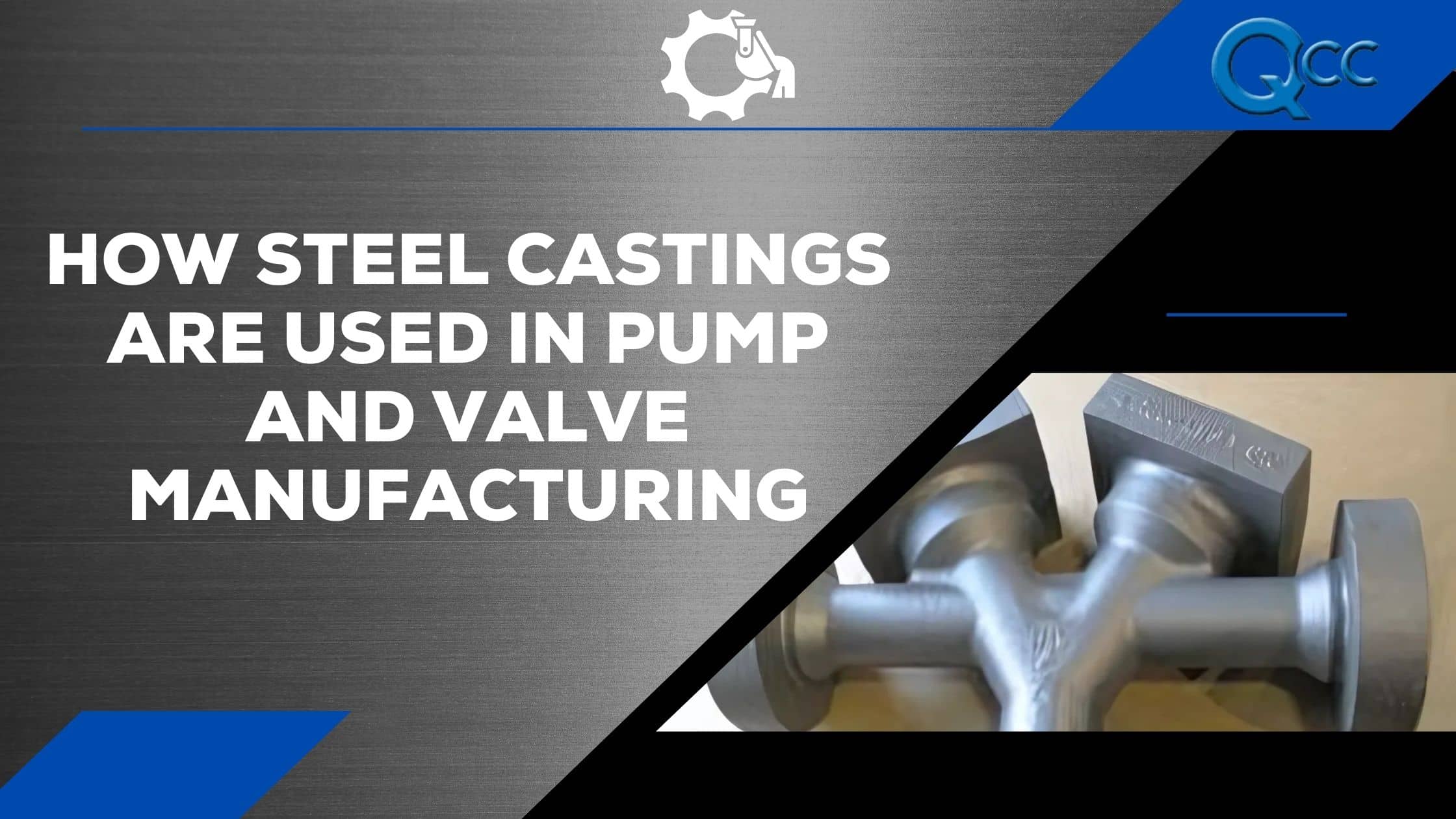
The pump and valve industry relies heavily on durable, high-performance metal components capable of withstanding demanding operating conditions. From municipal water systems and power plants to oil refineries and chemical processing facilities, pumps and valves play a critical role in controlling the flow of liquids and gases throughout industrial systems. Many of the most important components in these systems are produced using steel castings, which offer the strength, durability, and design flexibility required for high-pressure environments.
Steel casting has become one of the most trusted manufacturing methods for pump and valve components because it allows engineers to create complex shapes with superior mechanical properties. At Quaker City Castings, we produce high-quality steel castings that support manufacturers in the fluid control industry, helping ensure that pumps and valves perform reliably in some of the harshest environments imaginable.
In this article, we explore why steel castings are essential in pump and valve manufacturing, how they improve performance, and the types of components commonly produced through the casting process.
Why Steel Castings Are Ideal for Pump and Valve Components
Pump and valve systems must operate under conditions that place extreme stress on materials. Many components are exposed to high pressure, corrosive chemicals, elevated temperatures, and continuous mechanical wear. Because of these challenges, the materials used in these systems must meet strict performance standards.
Steel castings offer several key advantages that make them well suited for these applications. One of the most important benefits is strength and durability. Cast steel components can withstand high internal pressures and mechanical loads without deforming or failing. This makes them ideal for pressure-containing parts such as valve bodies and pump casings.
Another important advantage is design flexibility. The casting process allows manufacturers to create complex geometries that would be difficult or expensive to produce using machining or fabrication. Intricate internal passages, reinforced sections, and optimized flow paths can all be incorporated directly into the casting design. These design features help improve efficiency and reliability in pump and valve systems.
Steel castings also provide excellent metallurgical properties. Through careful control of alloy composition and heat treatment processes, foundries can produce castings with specific characteristics such as improved corrosion resistance, enhanced toughness, and superior wear resistance. This level of control ensures that pump and valve components can perform consistently over long service lives.
Common Pump Components Made from Steel Castings
Pumps are used in a wide variety of industries to move liquids, slurries, and other fluids through piping systems. Because pumps often operate under significant pressure and mechanical stress, many of their critical components are manufactured as steel castings.
One of the most important cast components in a pump is the pump casing. The casing houses the internal rotating parts of the pump and must withstand both internal pressure and external mechanical loads. Cast steel pump casings provide the strength needed to maintain structural integrity while also allowing complex internal shapes that guide fluid flow efficiently.
Another key component is the impeller housing or volute, which directs fluid through the pump and helps convert rotational energy into flow. Casting allows manufacturers to create the smooth internal contours required to maintain efficient fluid dynamics and minimize turbulence.
Additional pump components commonly produced as steel castings include:
- Bearing housings
- Diffusers
- Pump covers and end plates
- Structural frames and supports
Because these parts must maintain tight tolerances and structural reliability, high-quality casting processes are essential.
Valve Components Produced Through Steel Casting
Valves play a critical role in regulating fluid flow, controlling pressure, and ensuring safe operation of piping systems. Like pumps, valves are frequently exposed to harsh conditions that require materials capable of maintaining performance under stress.
The valve body is one of the most important components produced through steel casting. It forms the main pressure boundary of the valve and must withstand the full operating pressure of the system. Steel casting provides the strength and durability required for this critical component.
Other valve components commonly manufactured as steel castings include:
- Valve bonnets
- Valve covers
- Gate valve bodies
- Check valve housings
- Globe valve bodies
Casting these components allows manufacturers to incorporate reinforced walls, mounting features, and internal flow passages directly into the design. This improves both the strength and functionality of the final valve assembly.
Material Selection for Pump and Valve Castings
Material selection plays a crucial role in ensuring the long-term performance of pump and valve components. Different operating environments require different material properties, such as corrosion resistance, heat resistance, or mechanical strength.
Many pump and valve manufacturers rely on carbon steel castings for general industrial applications where strength and durability are the primary concerns. Carbon steels offer excellent mechanical properties and can be heat treated to achieve the required hardness and toughness.
For applications involving corrosive fluids or harsh chemical environments, stainless steel castings are often used. Stainless steels provide superior corrosion resistance while still maintaining strong mechanical properties.
In high-temperature or highly corrosive environments, nickel-based alloys may be required. These advanced materials offer exceptional resistance to oxidation, corrosion, and thermal degradation.
At Quaker City Castings, we produce a wide range of alloys designed to meet the demanding requirements of pump and valve manufacturers across many industries.
The Role of Heat Treatment in Pump and Valve Castings
Heat treatment is an essential step in producing high-performance steel castings for pump and valve applications. After the casting has solidified and cooled, heat treatment processes are used to refine the metal’s internal structure and improve its mechanical properties.
Processes such as normalizing, quenching, and tempering can significantly enhance tensile strength, toughness, and wear resistance. Heat treatment also helps relieve internal stresses created during the casting process, improving dimensional stability and reducing the risk of cracking or distortion during service.
Because many pump and valve components must meet strict industry standards, proper heat treatment is critical to ensuring compliance with ASTM and ASME specifications.
Precision Machining for Final Valve and Pump Components
While casting produces the overall shape of a component, many pump and valve parts require precision machining to meet final dimensional requirements. Surfaces such as sealing faces, mounting interfaces, and threaded connections must often be machined to tight tolerances to ensure proper assembly and leak-free operation.
At Quaker City Castings, our in-house machining capabilities allow us to provide finished components that meet exact specifications. By integrating casting, heat treatment, and machining within the same facility, we can maintain strict quality control while reducing production lead times.
This vertically integrated approach allows pump and valve manufacturers to source high-quality components from a single trusted supplier.
Supporting the Pump and Valve Industry with American-Made Castings
The pump and valve industry depends on reliable component suppliers capable of delivering consistent quality and performance. Domestic foundries play an important role in maintaining a secure and dependable supply chain for these critical industries.
Quaker City Castings is proud to support pump and valve manufacturers with high-quality American-made steel castings. Our expertise in no-bake sand casting, alloy selection, heat treatment, and machining allows us to produce durable components that meet the rigorous demands of modern fluid control systems.
As industries continue to prioritize reliability, safety, and supply chain stability, domestic casting partners will remain an essential part of the manufacturing ecosystem.
Conclusion
Steel castings play a vital role in pump and valve manufacturing, providing the strength, durability, and design flexibility needed for high-pressure and high-performance applications. From pump casings and impeller housings to valve bodies and pressure-containing components, casting allows manufacturers to produce complex parts that perform reliably under demanding conditions.
By combining advanced casting processes with precise machining and heat treatment capabilities, Quaker City Castings delivers high-quality components that help power critical infrastructure and industrial systems around the world.
For manufacturers seeking durable, high-performance castings for pump and valve applications, working with an experienced American foundry partner ensures both quality and reliability.
Leave A Comment