
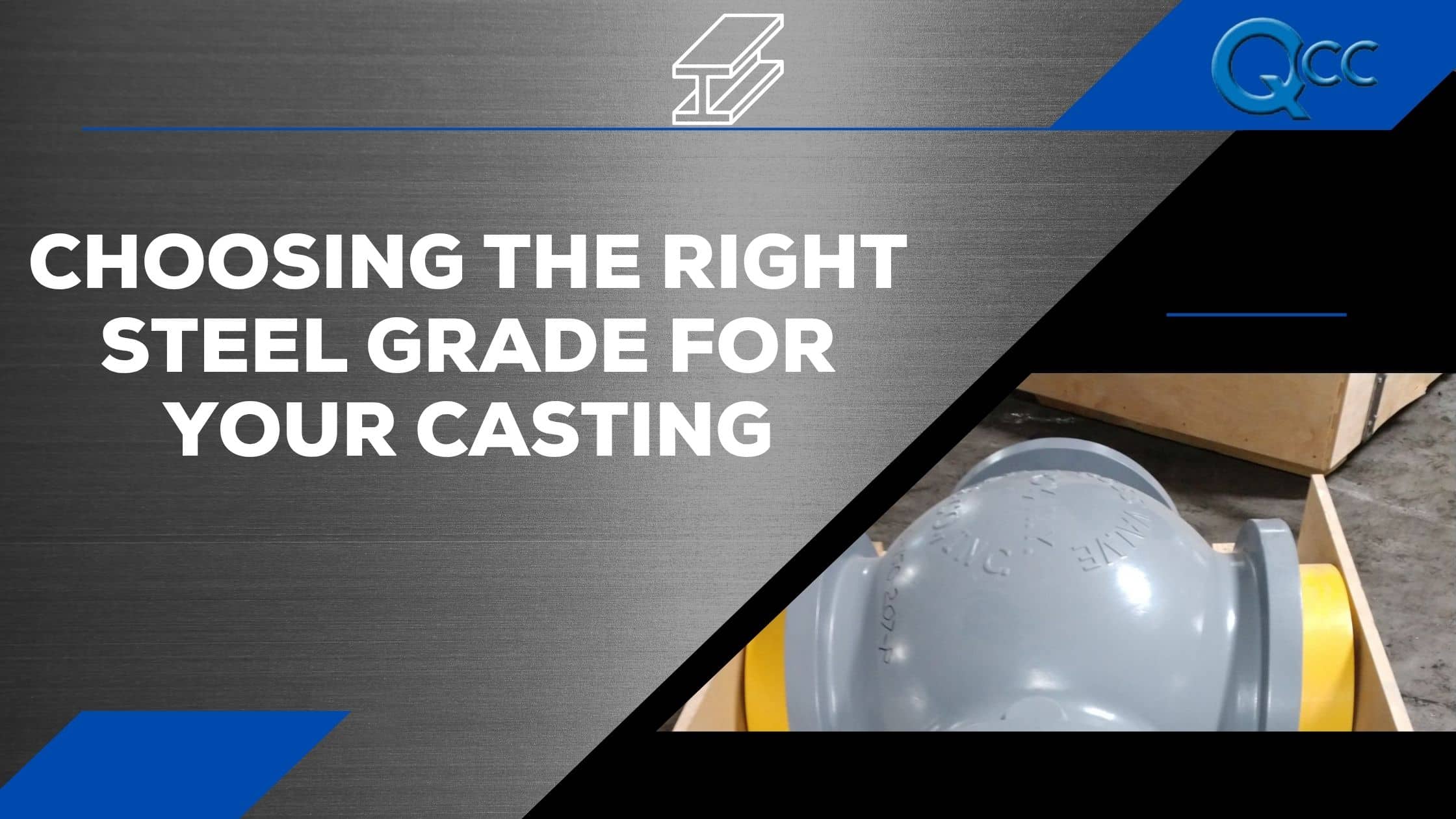
Selecting the right material is one of the most important decisions in the metal casting process. The steel grade used in a casting directly affects its strength, durability, corrosion resistance, and overall performance in service. For engineers and manufacturers, this decision goes beyond simply meeting specifications it plays a critical role in ensuring long-term reliability and cost efficiency.
At Quaker City Castings, we work with a wide range of steel alloys tailored to demanding applications across industries such as energy, defense, infrastructure, and fluid control. Understanding how to choose the right steel grade for your casting helps ensure that each component performs exactly as intended in real-world conditions.
Why Steel Grade Selection Matters
Steel is not a single material but a broad family of alloys with varying compositions and properties. Even small changes in carbon content or alloying elements can significantly alter how a casting behaves under load, exposure, or wear.
When the wrong steel grade is selected, the consequences can be costly. Components may wear prematurely, corrode faster than expected, or fail under stress. In critical applications, these issues can lead to downtime, expensive repairs, or even safety concerns. On the other hand, selecting the appropriate steel grade ensures that the casting maintains its integrity over time while reducing maintenance and lifecycle costs.
Understanding Mechanical Requirements
The first step in choosing the right steel grade is understanding the mechanical demands placed on the component. Every casting is designed to handle specific loads, pressures, and operating conditions. Tensile strength, yield strength, and impact resistance all play a role in determining how a material will perform.
For applications involving heavy loads or high pressure, such as structural supports or pressure-containing components, stronger materials are often required. Alloy steels and properly heat-treated carbon steels are commonly used in these situations because they provide the strength and toughness needed to withstand demanding conditions.
However, strength alone is not always the only consideration. In many applications, the ability to absorb impact without fracturing is just as important. This is where toughness becomes a key factor, particularly in industries where components experience dynamic or cyclic loading.
Considering the Operating Environment
Beyond mechanical performance, the environment in which the casting will operate has a major influence on material selection. Exposure to moisture, chemicals, extreme temperatures, or abrasive materials can all affect the lifespan of a component.
In environments where corrosion is a concern, such as water systems or chemical processing plants, stainless steel or corrosion-resistant alloys are often required. These materials are designed to resist oxidation and chemical attack, helping extend the service life of the casting.
High-temperature environments introduce another set of challenges. Components used in power generation or industrial processing must maintain their strength and stability even under extreme heat. In these cases, alloy steels or specialized high-temperature materials are typically selected to ensure consistent performance.
For applications involving abrasive wear, such as mining or heavy equipment, harder materials may be necessary to resist surface degradation. Each environment presents unique challenges, and selecting the right steel grade is essential to overcoming them.
The Importance of Corrosion Resistance
Corrosion is one of the most common causes of failure in metal components. When a casting is exposed to moisture, chemicals, or salt, it can begin to degrade over time, weakening the structure and reducing performance.
To address this, many applications rely on stainless steel or other corrosion-resistant alloys. Materials such as CF8 and CF8M stainless steel are commonly used in pump and valve systems where exposure to liquids is constant. These alloys provide a combination of strength and corrosion resistance that is critical for maintaining performance in fluid-handling environments.
In more aggressive conditions, higher alloy materials or nickel-based alloys may be required. Selecting a corrosion-resistant material upfront can significantly reduce maintenance costs and extend the lifespan of the component.
Heat Treatment and Its Role in Performance
Heat treatment is a key factor in determining the final properties of a steel casting. While the chemical composition of the material sets the foundation, heat treatment refines the internal structure and enhances performance.
Processes such as normalizing, quenching, and tempering are used to improve strength, hardness, and toughness. Heat treatment also helps relieve internal stresses that develop during the casting process, which improves dimensional stability and reduces the risk of distortion.
At Quaker City Castings, our in-house heat treatment capabilities allow us to control this process with precision. This ensures that each casting meets the required mechanical properties and performs reliably in its intended application.
Machinability and Production Efficiency
Another important consideration when selecting a steel grade is machinability. Many cast components require machining after the casting process to achieve final dimensions, surface finishes, or functional features.
Some steel grades are easier to machine than others, which can have a significant impact on production time and cost. Materials that are too hard may increase tool wear and machining difficulty, while softer materials may not provide the required strength.
Finding the right balance between machinability and performance is essential. By selecting a steel grade that meets both mechanical and manufacturing requirements, companies can improve efficiency and reduce overall production costs.
Common Steel Grades Used in Casting
Different steel grades are suited to different applications, and understanding these options helps guide material selection.
Carbon steel castings are widely used because they offer a strong balance between performance and cost. These materials are suitable for many general industrial applications and can be heat treated to improve their properties.
Alloy steels take performance a step further by incorporating elements such as chromium, molybdenum, or nickel. These additions enhance strength, wear resistance, and temperature performance, making alloy steels ideal for more demanding environments.
Stainless steel castings are chosen when corrosion resistance is critical. These materials are commonly used in fluid control systems, food processing equipment, and chemical applications where exposure to corrosive substances is unavoidable.
For the most extreme environments, high-alloy and nickel-based materials provide exceptional resistance to heat and chemical attack. These materials are often used in specialized industries where standard steels would not perform adequately.
Matching the Steel Grade to the Application
Every application has its own set of requirements, and selecting the right steel grade involves aligning material properties with those needs. Pump and valve components, for example, often require corrosion-resistant materials to handle constant exposure to fluids. Power generation equipment may require heat-resistant alloys to operate at elevated temperatures.
Heavy equipment and mining applications demand materials that can withstand both high loads and abrasive conditions. In defense and infrastructure applications, reliability and toughness are critical to ensuring long-term performance.
By carefully evaluating the application, engineers can select a material that not only meets immediate requirements but also performs consistently over time.
The Value of Working with an Experienced Foundry
Material selection is not always straightforward, and working with an experienced foundry can make a significant difference. A knowledgeable partner can help evaluate design requirements, recommend appropriate materials, and ensure that the casting process is optimized for both performance and manufacturability.
At Quaker City Castings, we work closely with our customers to guide material selection from the earliest stages of a project. Our team ensures compliance with industry standards while also helping customers avoid costly mistakes related to over- or under-specifying materials.
This collaborative approach leads to better-performing components and more efficient production processes.
Balancing Performance and Cost
Choosing the right steel grade is not just about performance—it is also about cost. Using a higher-grade material than necessary can increase expenses without providing additional value. At the same time, selecting a material that does not meet performance requirements can lead to early failure and costly replacements.
The goal is to find the optimal balance between durability, performance, and cost efficiency. This requires a clear understanding of both the application and the available material options.
Final Thoughts
Choosing the right steel grade for your casting is a critical step in ensuring long-term performance and reliability. From mechanical strength and corrosion resistance to heat treatment and machinability, every factor plays a role in determining how a casting will perform in service.
At Quaker City Castings, we combine metallurgical expertise with advanced casting, heat treatment, and machining capabilities to deliver high-quality steel castings tailored to each application. Our team works closely with customers to ensure that every component is built to meet the demands of modern industry.
If you’re evaluating materials for your next project, contact Quaker City Castings to discuss your requirements and find the right steel grade for your casting.
Leave A Comment